For many people outside academia, “sabbatical” may conjure up images of professors taking a year off. But for faculty, a sabbatical isn’t a break from work. It’s a chance to have sustained time for research, writing, and projects that are difficult to pursue during a normal academic year.
And there are many ways to spend that time.
Our faculty have used sabbatical time to work from home, join research communities abroad, travel to libraries and conferences, finish long-running book projects, and simply have more time to think. Recent and upcoming sabbaticals from Domenica Romagni, Matt MacKenzie, Jeff Kasser, and Eirik Harris offer four different glimpses of what that time can look like.
Following the research wherever it leads
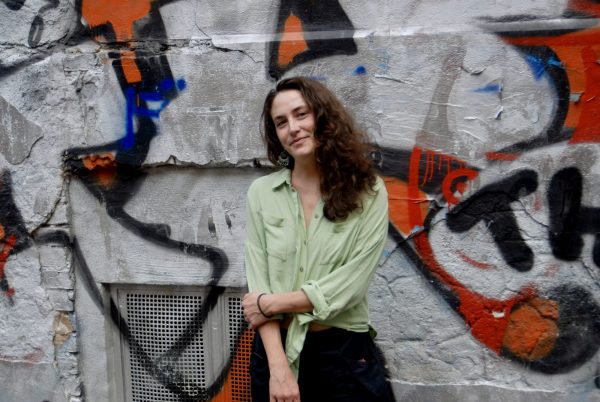
For Domenica Romagni, sabbatical has taken her from Fort Collins to Madison, Wisconsin, and now to Berlin, Germany, as she works on two book projects and becomes part of different research communities along the way.
Romagni began her sabbatical in Fall 2025, focusing on a book on Spinoza’s aesthetic theory for the Cambridge Elements series while also laying the groundwork for a larger project on aesthetics in the 17th century. Her first semester was spent in Fort Collins, where she worked mostly from home while continuing to come to campus and supervise two MA students, who both defended their theses in Spring 2026.
In Spring 2026, she moved her research to the Institute for Research in the Humanities at the University of Wisconsin–Madison as a Solmsen Fellow. There, she attended weekly seminars where fellows presented works in progress, a philosophy seminar on causation, and a reading group on Descartes’ Les Passions de l’âme. In between, she read and wrote—sometimes in her office, sometimes at home, and sometimes at a coffee shop.
Now in Berlin as a Humboldt Fellow at Humboldt-Universität zu Berlin, Romagni is turning more of her attention to the larger project in Rationalist aesthetics. She is also working with scholars in early modern philosophy and preparing for an October conference on imaginative ideas in Spinoza that she is co-organizing with Leonardo Mauro and Oliver Toth. The conference will bring together scholars from several institutions to explore the role of imagination in Spinoza’s philosophy—one of the projects that has grown out of the connections she has made during her sabbatical.
Her Cambridge Element is also coming out, and she is hoping to find a publisher for the larger book project. For Romagni, the sabbatical has been a chance not only to make progress on her own research, but also to build new connections and projects that will continue well beyond the year.
A year of focused work—at home
Not every sabbatical requires crossing an ocean. Matt MacKenzie spent his most recent sabbatical in his home office, where he established a consistent Monday-through-Friday routine: writing in the mornings and editorial work in the afternoons with daily walks coordinated around his family’s schedules.
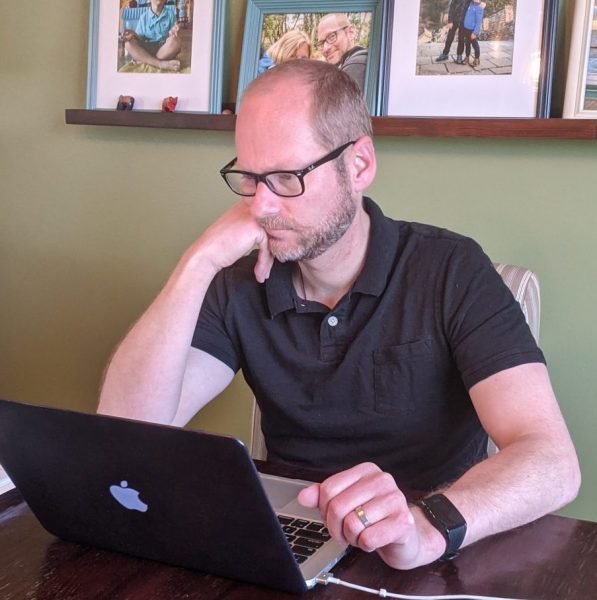
His goal was to complete two major book projects—an edited volume of more than 400 pages and 20 chapters, as well as his second monograph. The structure gave him the kind of sustained concentration that is difficult to maintain during a normal academic year. As MacKenzie puts it, the routine was “much more like dissertation work” than his usual “hectic and varied on-campus routine.”
MacKenzie completed both projects on schedule. The edited volume was published in January 2026, and his monograph followed in July. The work has also opened up new possibilities, including ideas for future journal articles and a proposal for a Routledge Handbook in his subfield.
Books, music, coffee—and Peirce
Jeff Kasser also spent his most recent sabbatical at home, in part because staying home allowed him to continue with parenting responsibilities. He typically worked in his basement, surrounded by books, LPs, and CDs, with coffee and (wordless) music nearby. His two dogs, he notes, helped keep things in perspective.

Kasser’s sabbatical focused largely on his longstanding work on Charles Sanders Peirce—and on the difficulty of ever quite finishing it.
“I go into each sabbatical thinking, ‘I may not quite finish what I have to say about Peirce, but I will at least get close enough to doing so that I can finally shift to my project on William James,’” Kasser says. “And I never get any closer to being done with Peirce.”
But Kasser also finds the time deeply rewarding. Being away from teaching and service gives him the chance to develop “depth and clarity” about questions that have been on his mind for years. He also uses sabbatical time to keep his teaching fresh, revisiting topics such as probability and its history and staying current with developments in physics.
“Not many students in PHIL 120 will know or care if I am approximately up to speed on quantum entanglement,” he says, “but the ones who do care really care.”
Planning for the next one
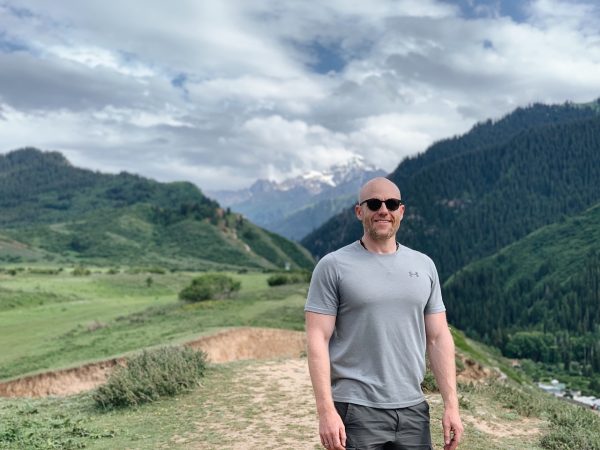
Eirik Harris is looking ahead: his sabbatical is still a year away, and he doesn’t yet know exactly where he’ll spend it.
Harris plans to return to a book project that has been “lingering for far too long.” The breadth of the topic requires a long stretch of uninterrupted time, and what he wants most from his sabbatical is “several uninterrupted months to read, reflect, and write.”
He also hopes to spend at least part of the year in East Asia, making use of library resources and connecting with scholars who specialize in classical Chinese philosophy. Harris is currently applying for fellowships and visiting positions at universities in Hong Kong, Taiwan, and China, any of which could extend his sabbatical from a semester to a full year.
For now, the destination remains uncertain. “It is somewhat strange to know that I will be on sabbatical in less than a year but still do not know exactly where I’ll be,” he says.
Time to think
The four sabbaticals look very different. Some involve international travel and new research communities; others happen mostly at home, around family schedules and the occasional dog. But all four offer something faculty rarely have during the academic year: uninterrupted time to work on the questions and projects that keep them thinking.