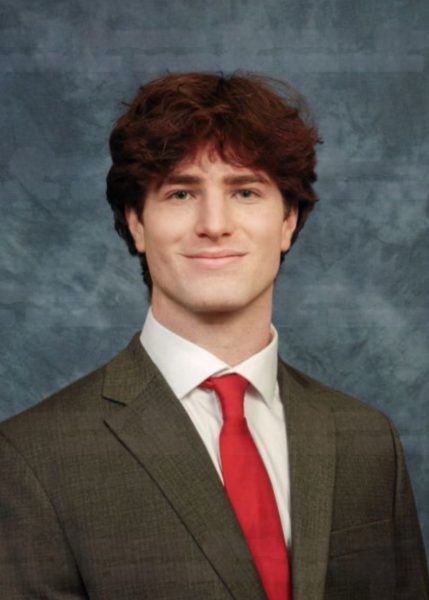
Sean Lancey, now a senior at CSU, didn’t expect that an elective logic course in the philosophy department would shift the entire trajectory of his academic life and launch him toward a high-impact internship with Congressman Joe Neguse.
“Philosophy just cut through the noise,” Lancey explains. “Unlike other fields, especially politics, philosophy uses an agreed-upon set of rules. Philosophy doesn’t make nearly as many assumptions, and in fact implores you to question them.” That insight came during PHIL 110, an introductory logic course. What began as a curious detour soon became a defining academic moment.
Lancey’s transition from his original major, political science, to philosophy wasn’t a rejection of politics, but rather a reorientation toward the skills he realized were most vital in that field. “With a background and interest in political science, being able to break down and digest arguments quickly was important to me,” he says. Philosophy provided that, and much more. “I realized that philosophy bolsters skills like reading, writing, and articulation to an incredible extent. As a pre-law student, these skills were incredibly important, and the classes were fun too.”
It was this blend of rigorous academic training and a passion for civic life that set the stage for Lancey’s next big move: a competitive internship in Congressman Neguse’s office. Throughout the spring semester, he worked on constituent services, engaged in policy research, and staffed town hall events around the district.

“Our daily tasks as interns centered very much around constituent relations, mostly phone calls, emails, in-person visits,” he recalls. “If constituents presented issues involving federal agencies, I would log their cases and pass them along to the appropriate caseworker.” While much of the work involved detailed communication and tracking constituent concerns, it was a larger research project that tested—and proved—the power of his philosophy background.
“We were given a project in which we had to find a bill not yet co-signed by Congressman Neguse, research it, and write a policy memo which would be presented to him,” Lancey says. “Through this project, I learned about federal policy and how complex many of these bills are. It was difficult to digest, but it was nothing compared to Hegel.”
Philosophy gave Lancey more than an intellectual foundation; it gave him confidence. “Studying philosophy intensely deepened the foundational skills required in any career: comprehension of abstract issues and arguments, correct and consistent use of logic, and the ability to read difficult text,” he says. “Throughout my internship, I found myself employing these skills not only on the phone with constituents but also in my research on policies.”
Beyond technical competence, philosophy also offered a broader lens through which Lancey could see the limits and potential of real-world politics. “Every time someone, without hesitation, blurted out a one-liner opinion on a nuanced topic, I got a sense of appreciation for my background in philosophy,” he says. “It made me particularly curious about political philosophy and sociology. I started reading more economics and political theory, especially because of how often callers would bring up concepts like bigger government or market restriction. The internship really did further my interest and understanding of philosophy.” Lancey’s congressional internship not only confirmed his interest in law and public service but also reaffirmed how relevant philosophy is in practice and not just in theory.
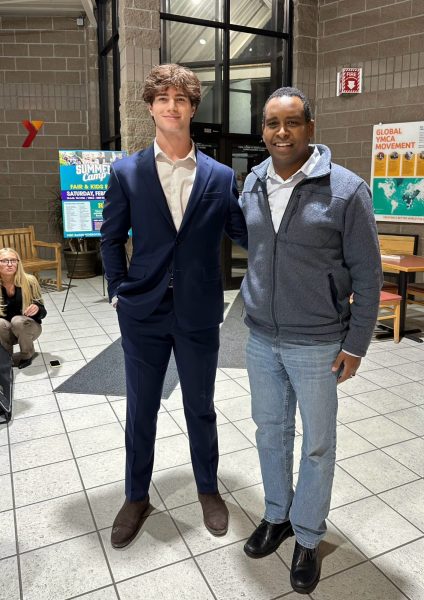
On campus, Lancey serves in the Associated Students of Colorado State University (ASCSU). He started as a senator focused on budget and disability legislation and was recently named Deputy Director of Policy Initiatives in the executive branch. “ASCSU has been an incredible experience,” he reflects. “It has given me insights into the workings of our university and showed me how student involvement is key to a healthy campus.”
That sense of civic responsibility combined with a sharp, philosophical mind continues to guide Lancey as he plans for life after CSU. He hopes to take a gap year for work experience before enrolling in law school, a step he believes will only highlight the advantages of his philosophical training.
“Philosophy majors tend to score the highest of all majors on the LSAT,” he notes. “This is likely thanks to enhanced reading comprehension, an understanding of formal logic, and a background in argument analysis.” But the benefits don’t stop at test scores. “I don’t think the notorious amount of reading required in law school will be much of a shock to me,” he adds. “I already spend a lot of time reading difficult texts thanks to my coursework in philosophy.”
Looking ahead, Lancey envisions a future where philosophy and politics continue to shape his career. “Articulation, abstract thinking, and enhanced reading will be useful in whichever career I choose to use my law degree for whether that’s in private practice, government, or beyond.”