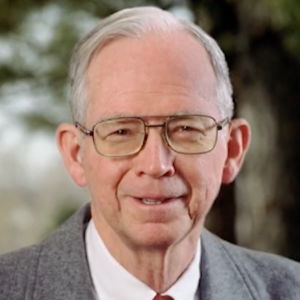
Holmes Rolston’s legacy lives on in the countless students, colleagues, and friends he inspired over decades of teaching, writing, and wilderness wandering. Rolston helped shape not only a field, but a way of seeing the world—through the lenses of wonder, responsibility, and reverence for life. Remembrances from across the CSU community speak to his intellectual brilliance, deep kindness, and unwavering belief in the moral significance of nature. Whether through a conversation on a trail or in the classroom, Rolston left a mark that continues to guide and uplift.
A Legacy of Wisdom in Nature
It is impossible to overstate the significance of Holmes Rolston III on the Department, the University, the field, and public consciousness of nature. Or on me.

He stands as the Father of Environmental Ethics, a position that serves to intellectually and academically ground so much thoughtful, caring, productive, insightful, impactful work that helps us understand our relationship with the natural environment. It is not merely his institutional position – a University Distinguished Professor with a staggering list of accolades and accomplishments who taught generations of students, a scholar and teacher exceedingly generous in his sharing of thoughts and wisdom, an accomplished naturalist and nature writer in the spirit of Aldo Leopold, a founder of academic societies and professional journals – beyond all that he serves as a source of inspiration and joy for so many.
Over the years I have been at CSU and the decades spent in the field, I have heard friends, colleagues, students, acquaintances from many walks of life, intellectual traditions, and disciplinary orientations tell stories about experiences with Holmes, and the profound, life-changing influence Holmes had on them. And in these shared stories, in the academic engagement with his work, in the very field he founded, and in the interactions with those affected, his legacy creates a network that creates great value, joy, and beauty.
Holmes’s legacy is tremendous. His inspiration is tremendous. Both are found in the extensive network of those whose view of the environment was transformed, and those who loved Holmes as they loved the natural world. 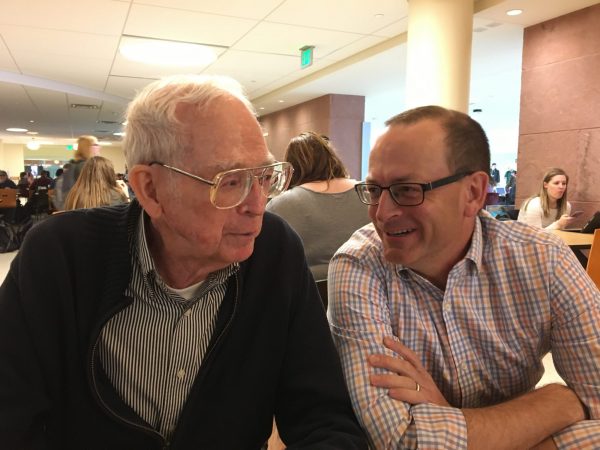
Early in his career, in “Nature and Human Emotions,” Holmes wrote:
“Nature is the bosom whence we come and go, and we here want to put in place those emotions that gather round the name “mother nature” … These emotions cheer for the natural parenting, for those generative, sustentative energies of this earthen home, productive forces strikingly present in the only nature we know in any complexity and detail. Life is something nature hands us…”
He was struck by the power, the generative productive creative power of systems and networks in the natural world. He created a new way of thinking about the natural world, one that focused on that creative power.
Holmes Rolston handed us a way of understanding and expressing the power and beauty of the world around us. We will be forever grateful. – Ken Shockley, Holmes Rolston III Chair in Environmental Ethics and Philosophy & Chair, CSU Department of Philosophy
On Trout and Truth: A Lesson in Intrinsic Value
Early in my philosophy studies at CSU, Holmes Rolston and my advisor Phil Cafaro invited me to go on a weekend hike. I was both honored and a bit curious about the reason for this invitation. The first thing I learned as we began our ascent in the mountains west of campus was that, though he was a few decades my senior, Holmes displayed great strength and stamina as he set the pace at the front of our party of three. When we reached our high elevation destination, we set up camp and split up to explore the few miles of trails in the area.
I brought my fly rod and ended up catching a large rainbow trout after several minutes of trying to seduce and ultimately harassing it with a mosquito fly pattern. This was somewhat of a revelation, because I could not recall having induced a reluctant fish to strike an inobtrusive fly. A bit later in the day I had worked my way down the outflow creek from the lake I had caught the rainbow in. And I proceeded to catch and release several brook trout from a large pool.
After I caught the same fish a second time, recognizable because of the unique spot pattern on his head and a small hook wound, I talked to him about his being fooled again and advised that he be more careful. But what I did not realize was that Holmes had come down the creek trail and had been observing me while I caught and released the trout.

in Alaska, circa 1987
As I placed the fish back in the water Holmes stepped out from behind some brush and made his presence known. Then he asked, did I think the trout understood my criticism about being gullible enough to get caught a second time? I responded I did not know for sure. That trout may just be reacting due to reflex not thinking in any way about alternative actions. But now … it did occur to me that even a trout may learn that something is not to be feared. Like if, for instance, a fish struck a fly, was caught and not harmed, and then was released.
I then remembered and related to Holmes that I had driven an Arctic grayling into an all fins erect whirling-dervish-like rage by dangling a shiny metal lure in front of him until he attacked. Holmes’ interest and further questions prompted me to recall similar observations of other animals possibly learning that I would not harm them. I had captured lynx, wolves and leopard while doing wildlife research. And perhaps because I handled them gently and released them, they concluded that I had rescued them from the traps and snares I had set. This, in turn, caused some of them to be unafraid, and even curious about what I was doing when we met again.
By the time we began our walk back to camp I believe that Holmes had more proof for his theory of intrinsic value. And I had learned through our dialectic, that if a cynical endangered species biologist can attribute personhood to a fish, then all life must, as Homes had written, have immense intrinsic value. And so, there is hope for us after all. Like many great philosophers, Holmes was a gifted teacher who caused others to realize what they already knew and discover new truths as well. – Winthrop R Staples III, CSU Philosophy alumnus (MA 2009), & Endangered species biologist and aspiring eco-science fiction novelist
Two Greats Debate: Holmes Rolston and Bernie Rollin on ethics, animals, and nature
Linda Rollin shared archived footage of a 1989 debate between Holmes Rolston and Bernie Rollin moderated by colleague David Crocker. All those who knew both philosophers can agree that while matched in intellect, Rolston and Rollin were quite opposite in temperament. This video showcases their unique personalities as well as the immense respect they had for one another.

In the spirited and thought-provoking exchange, Rolston and Rollin offer sharply contrasting views on the foundations of environmental ethics. Rollin champions a moral framework rooted in sentience. Only beings capable of experiencing pain or pleasure—humans and animals—fall within the “moral arena,” he argues. Rollin warns against deriving moral principles from nature alone and critiques Rolston for using biology as the basis for ethics without sufficient argumentation.
By contrast, Rolston calls for a more expansive “biological ethic,” claiming that plants and species have intrinsic value rooted in vitality and evolutionary history. “When I respect life, I want to respect not simply an isolated individual organism, whether it’s an animal or a plant, but I want to respect life as it takes place in species, in ecosystems,” he argues.
Though both philosophers agree on the importance of animal welfare, their deeper divergence—whether ethics should prioritize sentient individuals or entire ecological systems—remains unresolved in their conversation. Their debate, both playful and profound, invites us to examine not only what we value in nature, but why. – Shared by Linda Rollin, Assistant Professor Emerita of Philosophy, CSU
A Real Philosopher and True Friend

As another great nature lover and heterodox Christian, Henry Thoreau, once wrote: “To be a philosopher is not merely to have subtle thoughts, nor even to found a school, but so to love wisdom as to live according to its dictates, a life of simplicity, independence, magnanimity, and trust. It is to solve some of the problems of life, not only theoretically, but practically.” Holmes Rolston was a real philosopher and a true friend. Getting to know and work with him has been one of the great privileges and pleasures of my life. – Phil Cafaro, Professor of Philosophy (retired), CSU
A Man of High Standards
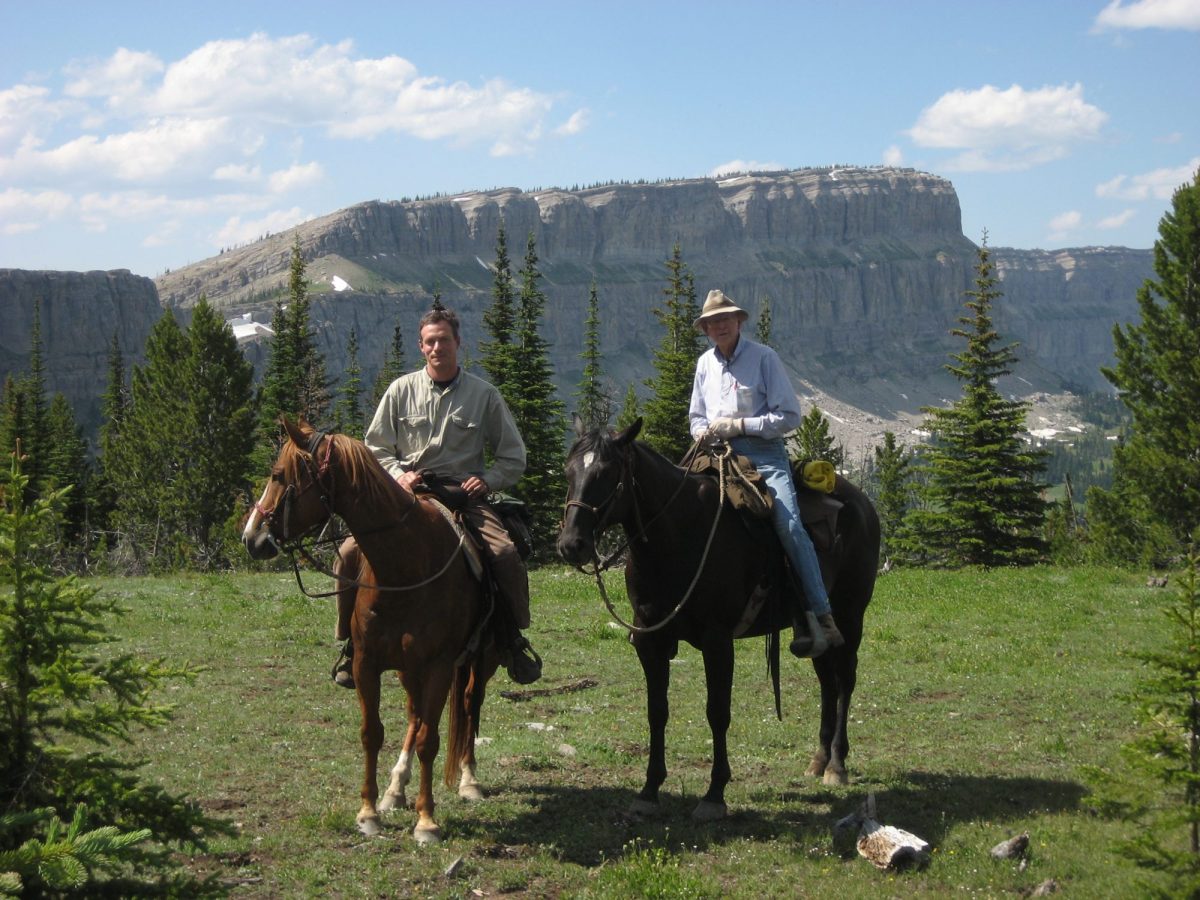
Holmes Rolston was a man who set high standards for himself and for others. Nearing eighty, he wanted to ride to the Chinese Wall in the Bob Marshall Wilderness in Montana. He needed someone younger to come along to help with the heavy saddles and the tent. He kindly invited me. The day before Holmes was scheduled to arrive, I fell off my mountain bike and separated my shoulder. I nervously called Holmes that night to share the bad news that I probably couldn’t come. There was a long silence on the other end of the phone before Holmes responded slowly, “Well…. you can ride a horse with one arm.” And he was right. – Christopher Preston, Professor of Philosophy at University of Montana & CSU Philosophy alumnus (MA, 1993)
International Collaborator
Holmes was a central figure in Environmental Ethics. He helped to establish many of the early institutions in the field, and his work was an important touchstone for writers thinking about the ethical aspects of people’s interactions with the environment. He was particularly focused on establishing international collaborations among environmental ethicists, forging relationships that continue to this day. One example is Holmes’ instrumental role in founding the International Society for Environmental Ethics of which I serve as the new President. – Katie McShane, Professor of Philosophy at CSU
Virginia Brothers

When I was in my first year in the graduate program at CSU, there was a Christmas holiday event at the home of professors Michael Losonsky and Jane Kneller. The house was filled with merry-making philosophers and students. Amid the din of competing conversations, my wife and I met Holmes Rolston, and in our conversation with the soft-spoken philosopher, we discovered that Holmes and I were both born in Virginia. “Where in Virginia,” asked Holmes with his slow, kind southern accent, to which I replied, “Staunton.” Holmes’s eyes widened, “Staunton!” he exclaimed and added “which hospital?” I answered, “King’s Daughters Hospital.”
At the sound of this answer, the stately gentleman grabbed me in a bear hug and shouted “Brother!” with an enthusiasm that matched the look of joy I saw on his face when he released me from his bear hug. His delight was a beautiful thing to see. I will always remember Holmes as having a child-like quality that contributed to his being a genuinely good person. – Rod Adams, Philosophy Instructor & CSU Philosophy alumnus (MA, 2003)

Sensible Hiker
Early in our careers at CSU Holmes would always phone me on the days he went hiking in the mountains to tell me what trail he would be taking to make sure someone knew where he was that day in case anything happened. It was a sensible and cautionary move characteristic of Holmes. – Jim Boyd, Professor Emeritus of Philosophy, CSU
A Well of Wisdom
Decades ago, when I first arrived at CSU from the Pacific Northwest, I came to realize that the environmental ceiling for much of the West was aridity. I set to work organizing a conference with speakers covering the environmental, economic, and cultural dimensions of the Arid West. Since I was a conservation biologist, Holmes had welcomed me with wide-open arms. Wishing to have a catchy title for the conference I asked Holmes if he had an idea. Without hesitation he said, “Human Rights, Water Rights, and the Rights of Nature.”
And so it was. Over time I came to realize that Holmes knew more about everything than most of us know about anything. – Rick Knight, Professor Emeritus of Wildlife Conservation, CSU Warner College of Natural Resources
Holmes’ Humor
I only met Holmes a few times, but I remember one occasion when he went around to each person in one of Cafaro’s graduate seminars and asked everyone if they had experiences in natural, agricultural, and urban settings. I was the only person in the room he declared a three-dimensional person (because I had had experiences in all three). – Addison Phillips, VP of Philanthropy, Colcom Foundation & CSU Philosophy alumnus (MA, 2018)
Life-Changing Mentor
I communicated with Dr. Holmes Rolston several years after my graduation. I wrote him a letter, expressing to him that he had made an indelible impression. I had been a precocious young freshman when I walked into his 400-level Science and Religion class. In fact, his well-written manuscript for the course was bound at Kinkos but bursting at the seams. The heady content difficult to digest for a newly minted 18-year-old. It was as if I was drinking from a fire hose!
But Dr. Rolston and his written work changed the landscape of my whole life. I told him so. In fact, I told him he had inadvertently impacted the formation of the moral and spiritual lives of my children. His work inspired us all to make animal rights a priority. Largely, it was his influence which inspired my continuing in school – to the point of completing doctoral work. I will forever be impacted by memories of his keen brilliance, non-judgmental attitude, cheerful disposition and exceeding kindness. – Jodi Lovejoy, Doctor of Behavioral Health & Psychotherapist & CSU Arts & Humanities Alumna (BA, 1988)
Finding One’s Place on Earth
In 2009 for the Earth Day Lecture at the University of Northern Colorado, Holmes Rolston spoke on “greening education in the new millennium” stating simply and unequivocally:
No education is complete until one has a concept of nature, and no ethic is complete until one has an appropriate respect for fauna, flora, landscapes and ecosystems. “Who am I?” needs the more inclusive question, “Where on Earth am I?” and leads to the most urgent question of the new millennium: “What on Earth ought we to be doing?”
 That was the very question that I had been asking myself since beginning doctoral studies with him several years earlier. At that time, although I was head of the UNC Honors Program, I had been experiencing professional and personal dissonance, believing that the 21st Century required a new vision for the college student experience in relation to environmental education and that those of us in the academy had a responsibility to lead that change. I was at a crossroads professionally and personally, seeking to define reason and determine direction for combined doctoral studies in three passions: faith, environment, and education.
Five years prior with no context to know Holmes had once faced his own interdisciplinary crisis, trying to bring his own version of reason and direction to studies in faith, science, and ethics, I reached out to him. In our first meeting, I was struck by his kindness and compassion and then humbled by his invitation to study with him. In my studies with him, I was intellectually challenged, found professional reconciliation with my diverse interests, and came to know a kind of grace amid my own struggles and striving to understand.
Indeed, undertaking an interdisciplinary PhD at midlife in environmental education and environmental ethics to be on the vanguard of pedagogical change was both a professional risk and an exhilarating adventure. I wanted to foster student engagement in high-impact practices—undergraduate research, internships, study abroad, learning communities, and more—that would open the world to our students. I believed that if students engaged broadly in their learning, they would engage broadly on the planet. My view was that student engagement and civic engagement ought to be deeply intertwined. It was what I was on earth to be doing, and Holmes believed in my ability to do it.
The studies that I undertook with him were the most intellectually challenging of my life—more challenging intellectually than my research for my dissertation. But I gained more than just knowledge, more than just clarity and understanding in my personal and professional directions. I received the gift of his kindness, the gift of his time, and the gift of his commitment to my education and my engagement. They are gifts I seek to give freely and liberally to my own students as they seek to answer the call for what on Earth they ought to be doing, as well.
What gifts, what treasures Holmes Rolston left me. What a gift, what a treasure was his life. – Debra Kaye Holman, PhD, Academic Success Coordinator & Residential Learning Communities Director, CSU Warner College of Natural Resources
The Divine within the Natural World
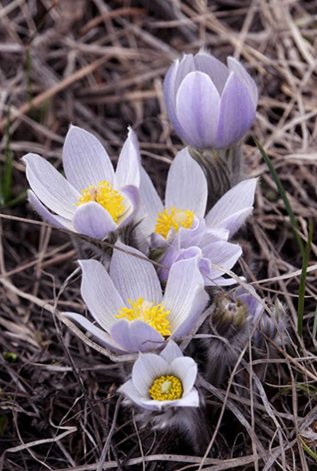
Holmes Rolston made no secret of the fact that his favorite essay was “The Pasqueflower.” He wrote it a decade after he arrived in Colorado. The story is a rich weave of science, wonder, and religion. The pasqueflower spreads its purple petals in early spring while snow still lies on the ground. “It dares to bloom,” Rolston writes, “when the winter of which we have wearied is not yet gone”.
The theme that runs through the essay, how life and beauty emerge from suffering and death, is a bridge between Rolston’s faith and his environmental philosophy. Even after the brutal cold of winter, life returns reliably. The essay puts Rolston’s prodigious talents on full display: his deep knowledge of biology, his seamless blending of science and philosophy, his stirring poetry. “Its suffering is not only the shadow of beauty,” he writes of the pasqueflower, “it is among the roots that nourish it.”
The bedrock for everything Rolston wrote was his sense of the divine within the natural world. The pasqueflower captures this deepest belief gracefully. “The way of nature,” he wrote, “is, in this deep though earthen sense, the way of the cross. Light shines in the darkness that does not overcome it.” – Christopher Preston, Professor of Philosophy at University of Montana, CSU Philosophy alumnus (MA, 1993), & Author of Saving Creation: Nature and Faith in the Life of Holmes Rolston III